
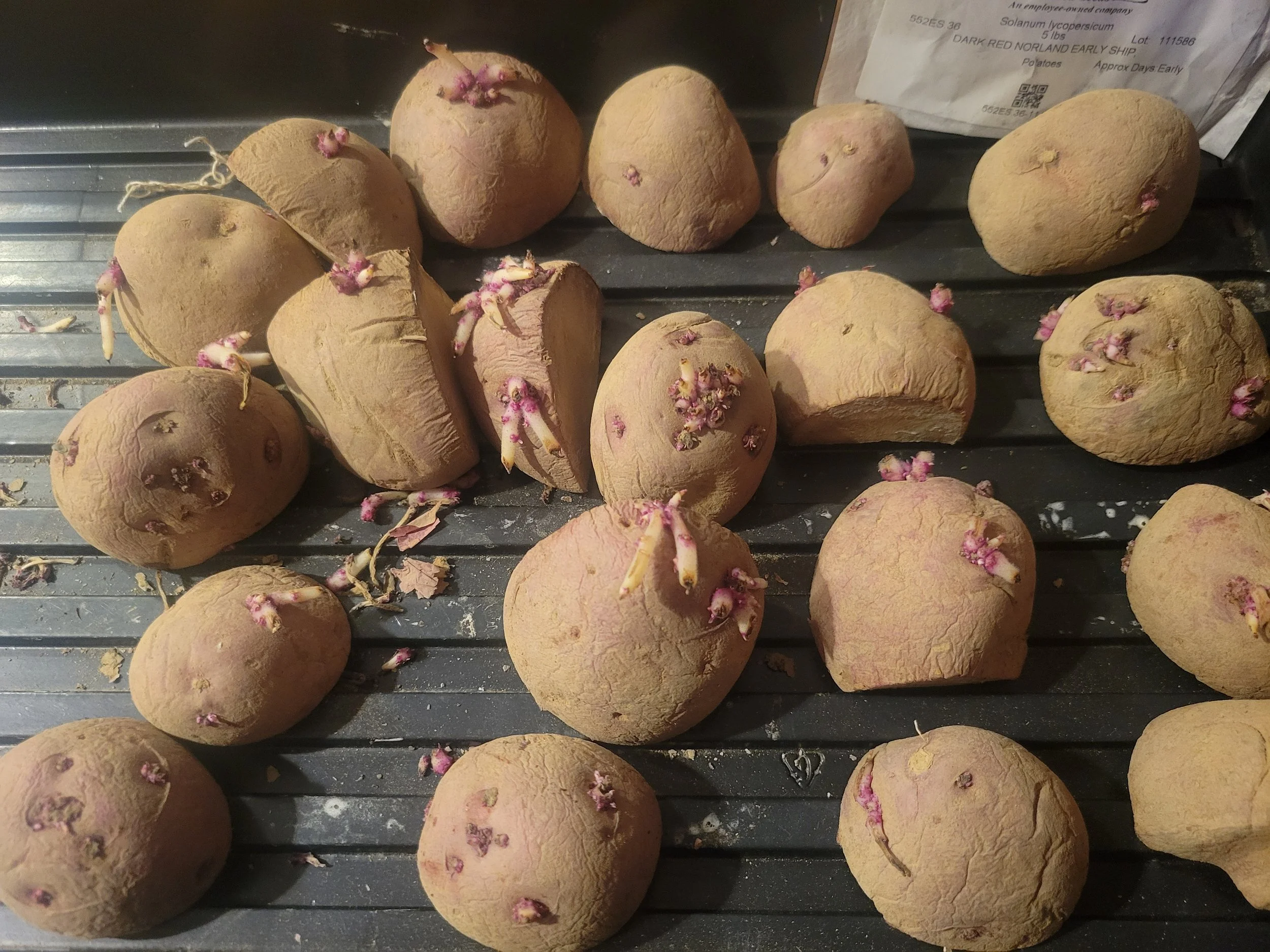
Planting Potatoes on St. Patrick’s Day
Why do gardeners plant potatoes on St. Patrick’s Day? The tradition turns out to be more than folklore. It’s part of a long history of using nature’s signals—blooms, leaves, and seasonal changes—to guide planting.
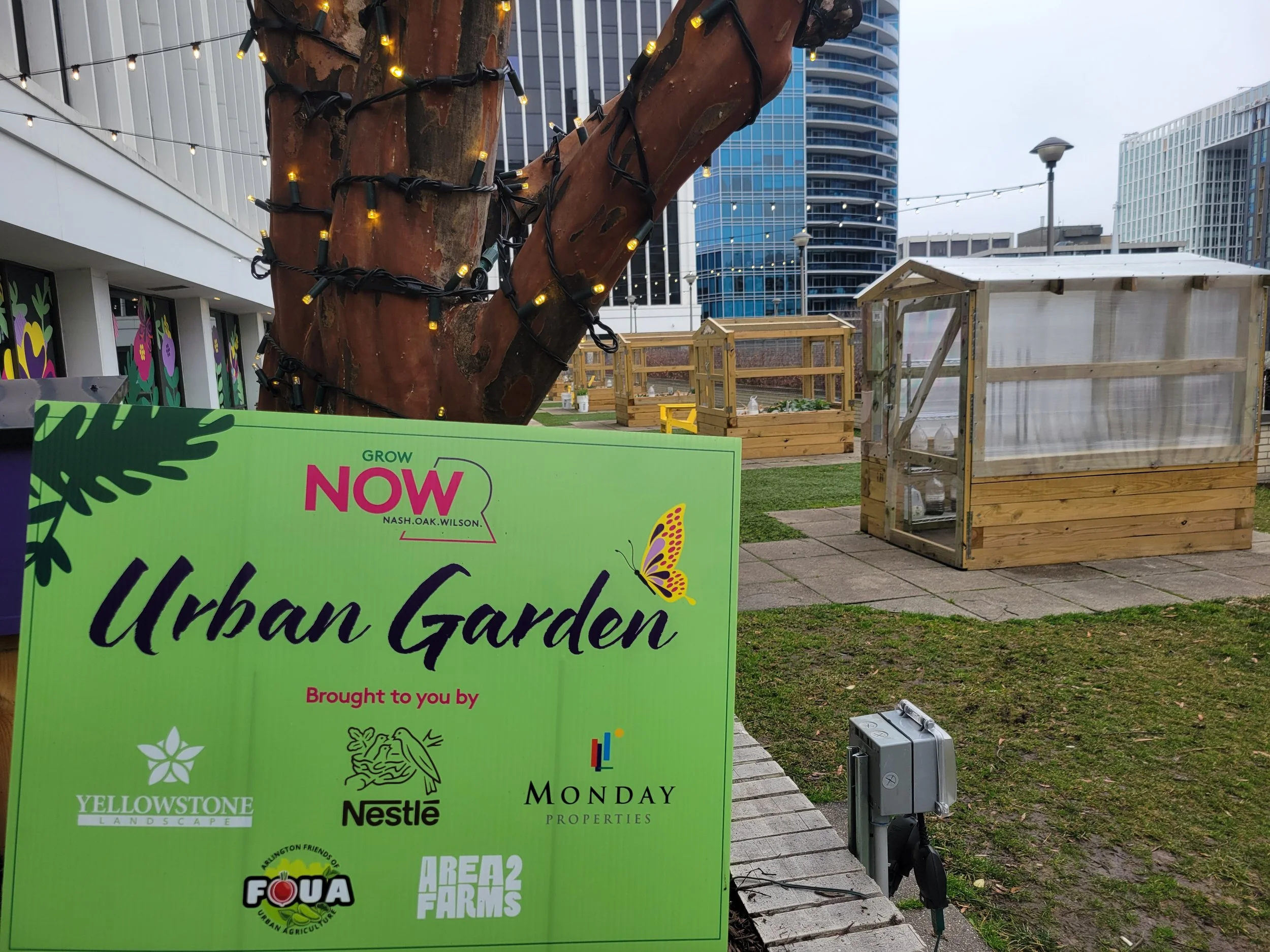
Urban Agriculture as Social Infrastructure
Urban agriculture may look like soil and seedlings, but what sustains it is partnership. When foodscapes are built through intentional, cross-sector collaboration, they shift from being short-term amenities to long-term social infrastructure. Designing partnerships for longevity—not just launch—changes everything.
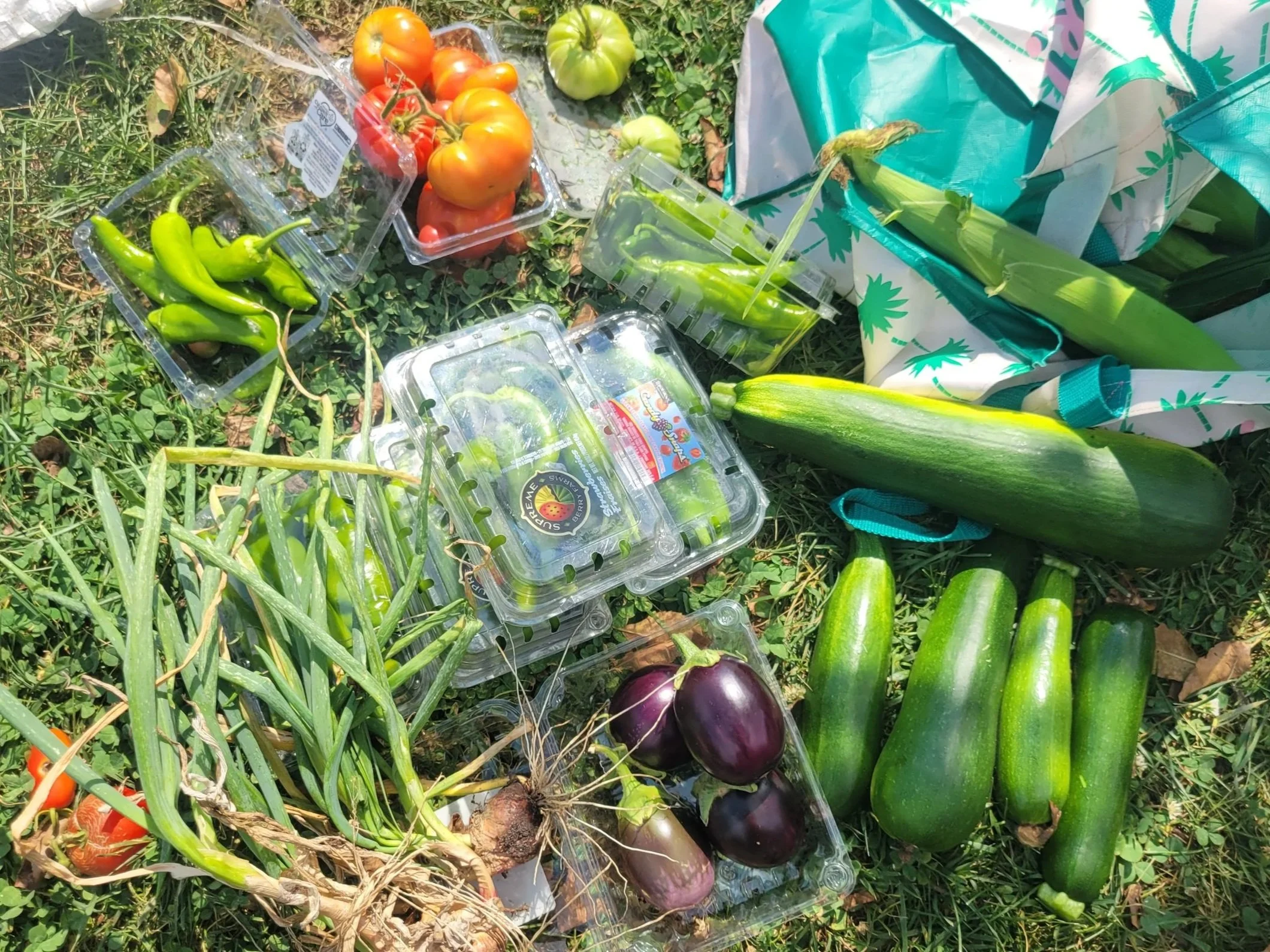
What Season Are You Designing For?
We often design gardens for spring enthusiasm and summer abundance. But planting plans are infrastructure documents — shaping labor, water, energy, and expectations long before harvest. What if long-term sustainability begins by asking: What season are you truly designing for?
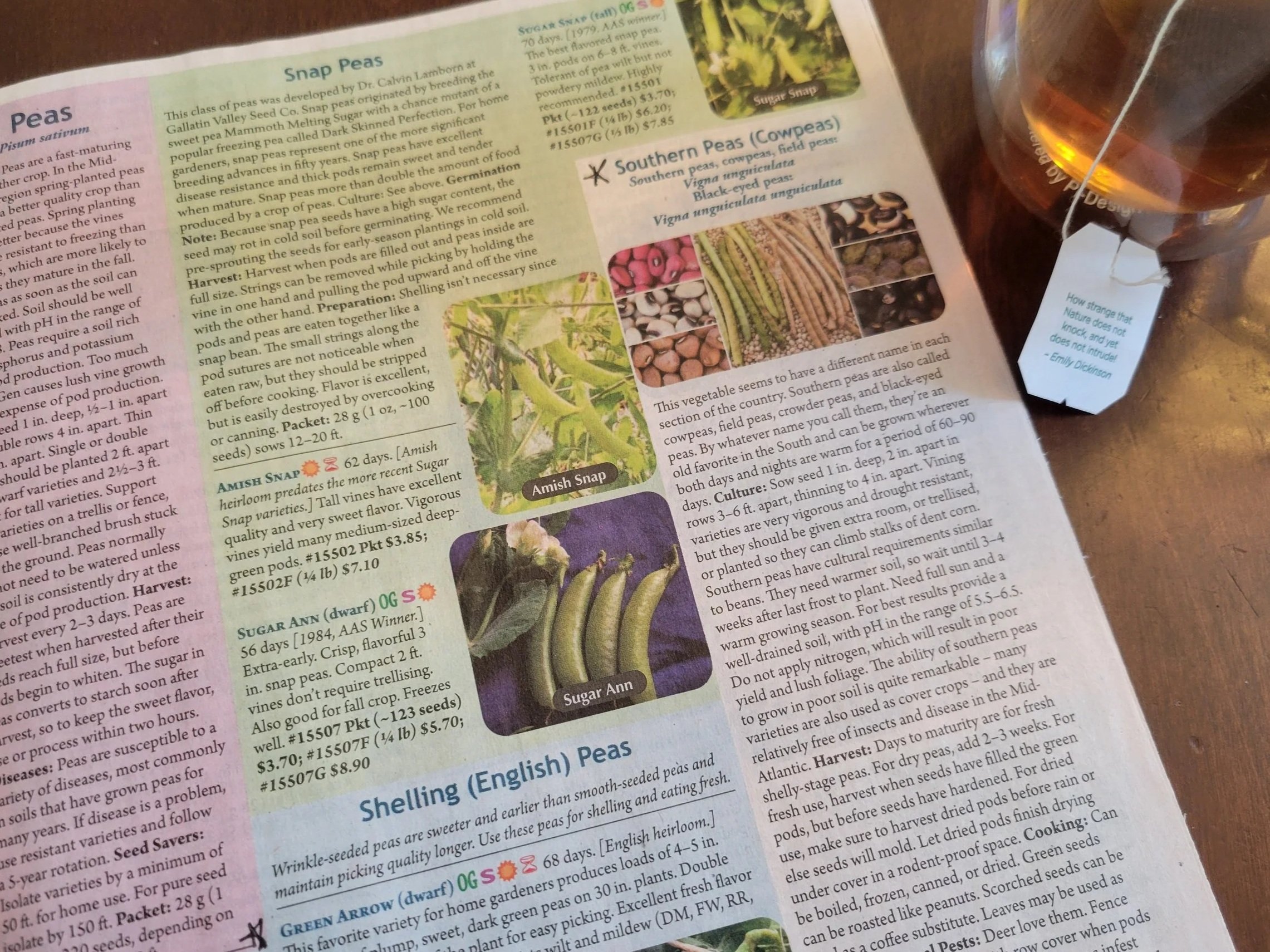
Before you buy seeds
Seed catalogs invite us to dream big—but dream gardens often demand more time, water, and attention than we can give. Drawing on years of experience and a maintenance-first mindset, this post explores how designing with perennials, realistic crop choices, and intentional planning can lead to a garden that thrives without burnout. Before you buy seeds, consider designing for the garden you’ll actually maintain.
Adopting a Maintenance Mindset: School Gardens
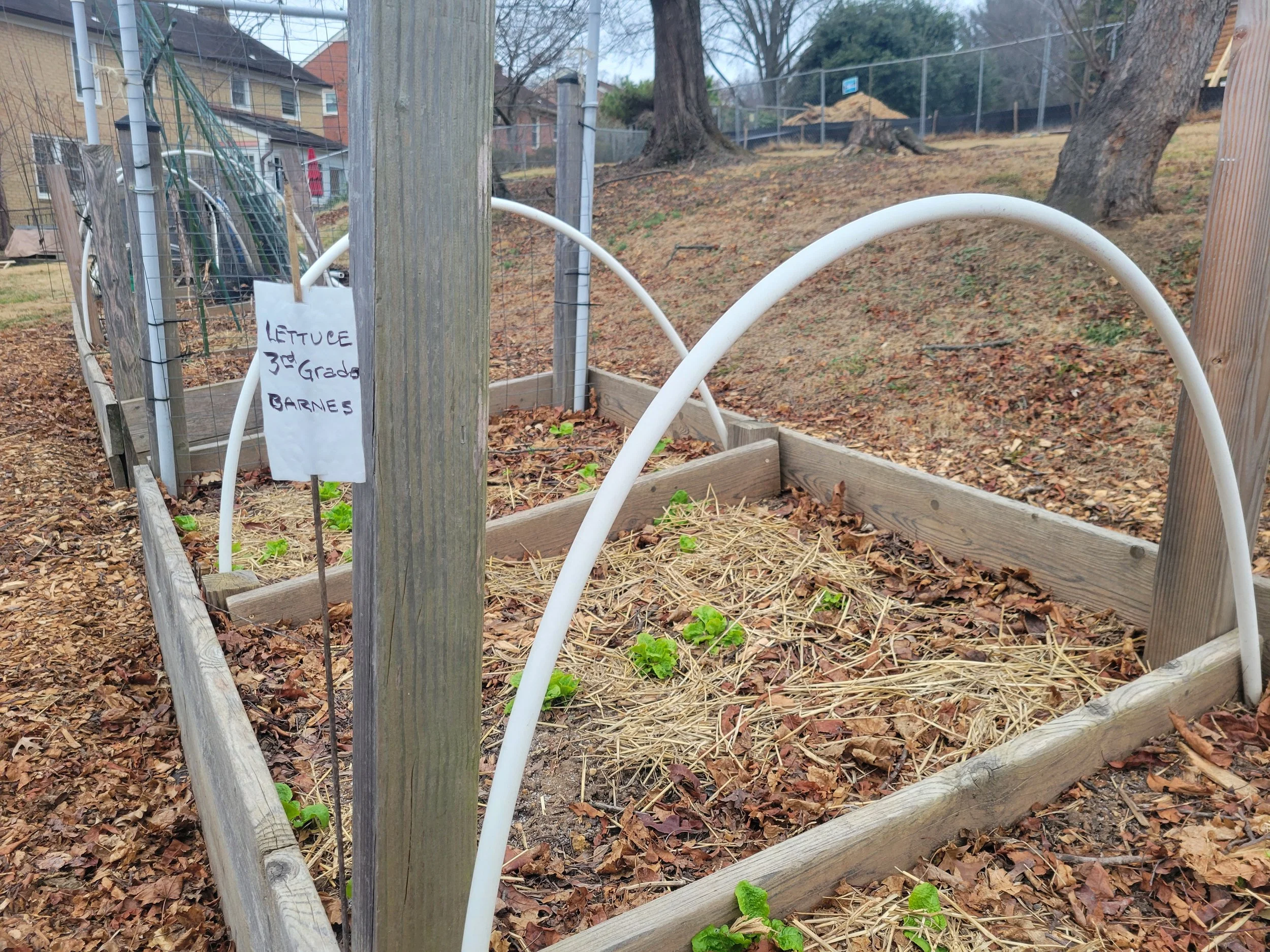
School gardens often struggle not because people don’t care—but because they’re designed to need care at the hardest time of year. In this Seedling post, I explore what it might look like to adopt a maintenance mindset for school gardens: one that aligns growing with the school calendar, treats summer as a season for soil-building and rest, and values stewardship as much as harvest.
Maintenance is a Mindset
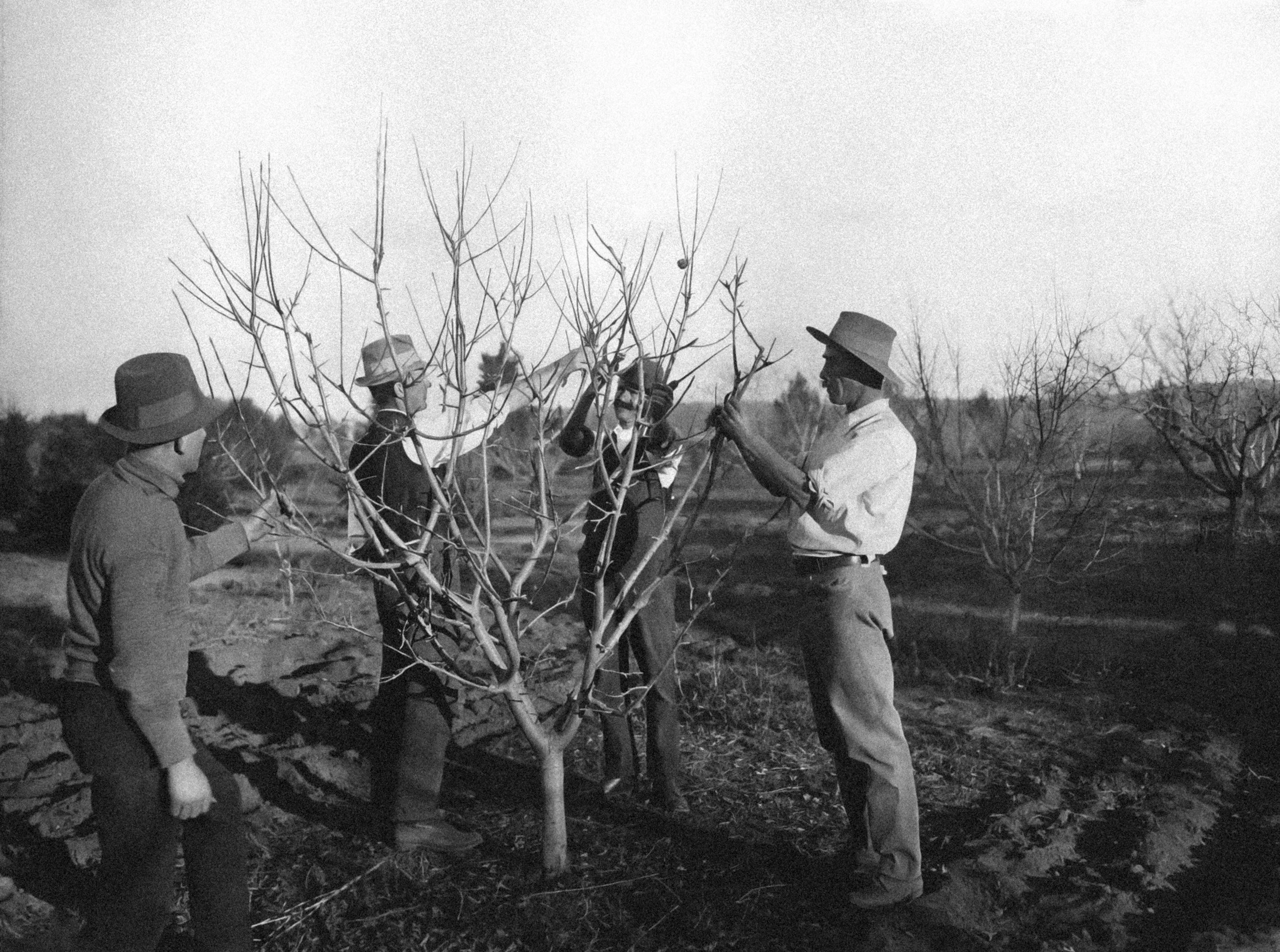
Urban foodscapes don’t fail because we can’t plant them—they fail because we don’t plan to care for them. A reflection on why maintenance is a mindset, not an afterthought.
Scaling Urban Agriculture: Completing the Financial Sustainability Cycle
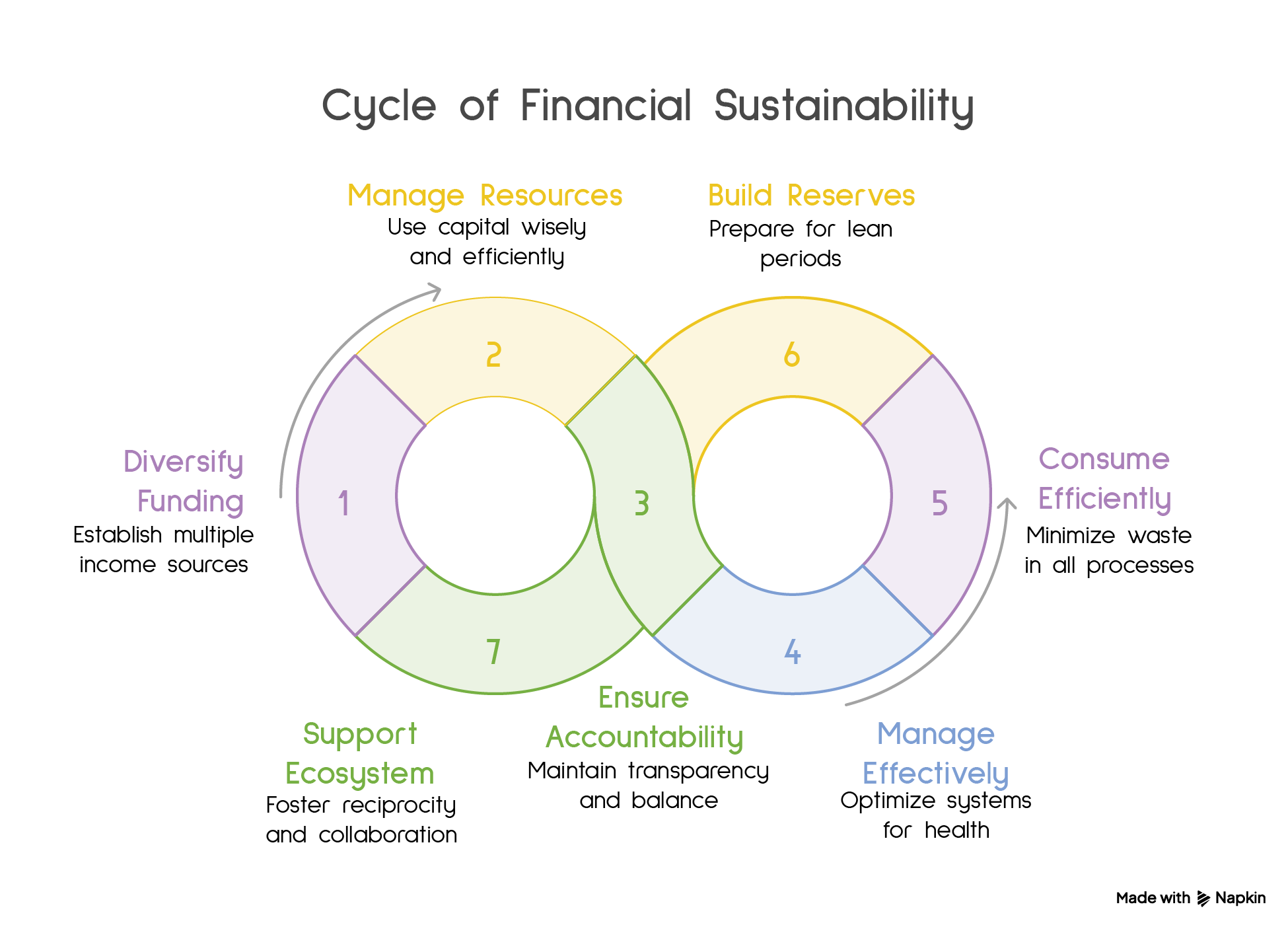
Financial sustainability isn’t a single decision or funding source—it’s a cycle. In the final post of this series, we complete the financial sustainability cycle by examining how efficient resource use, reserves, and reciprocity build on accountability and effective management. Together, these elements form a system that allows organizations to adapt, weather disruption, and invest in what matters most. Drawing on principles from adaptive management and ecosystem design, this post explores how financially sustainable organizations move beyond survival toward long-term resilience and regeneration.
Scaling Urban Agriculture: Beginning the Financial Sustainability Cycle
Just as vibrant foodscapes depend on biodiversity, healthy soil, and thoughtful care, financially sustainable organizations rely on diverse revenue, strong stewardship, clear accountability, and effective management. Part 3 of our Financial Sustainability Series explores these four core components and how they function as interconnected flows within your business model. This post offers practical guidance for strengthening the financial ecosystem that supports your mission-driven work—setting the stage for the final piece of the cycle in Part 4.

Scaling Urban Agriculture: Rooting Your Work in Purpose
Financial sustainability begins long before the numbers. Part 2 of the series explores the foundational questions—why you grow, who you serve, and how you deliver value—that anchor every decision in building resilient, regenerative foodscapes.

Scaling Urban Agriculture: How to Grow Systems That Last
Scaling urban agriculture means more than growing food — it’s about building systems that last. This first post in the Financial Sustainability Series defines financial sustainability through ecological principles like diversity, stewardship, and reciprocity, laying the foundation for a shared language to guide resilient foodscape design.

Growing on Borrowed Ground
When a government shutdown halted work in the Arlington House Kitchen Garden, I was reminded how fragile urban land access can be. Growing on borrowed ground means accepting uncertainty—but it also deepens our understanding of stewardship, resilience, and the shared responsibility of caring for land that sustains us all.

DIY Urban Agriculture: The 5-Gallon Bucket Edition
No yard? No problem. A single 5-gallon bucket can handle watering, growing, composting, and even pickling. See how Friends of Urban Agriculture used this simple tool to demonstrate small-scale growing systems during Arlington’s Urban Agriculture Month — and how you can build your own.

Growing Beyond the Pop-up: Food as a Long-Term Urban Activation
The new Grow Zone at Rosslyn’s NOW Park transforms an underused terrace into a living example of long-term urban food production — showing how community partners can turn short-term activations into lasting nourishment.
Photo credit: Alex Sakes @alexsakes and @alexsakesphotography.
